Relational First, Efficiency Second
Why relationship takes time, and why you can't thaw human connection with a stopwatch.
For three hundred years, we optimized for efficiency.
It worked beautifully for making things. Faster looms, tighter supply chains, shorter meetings, one-click everything.
But human beings aren't efficient. We wander. We repeat ourselves. We need the long way around before we trust each other. So every time a system got streamlined, a little more relationship got cut out of the loop: the chat at the counter, the neighbor who watched your kids, the dinner that ran three hours for no reason at all.
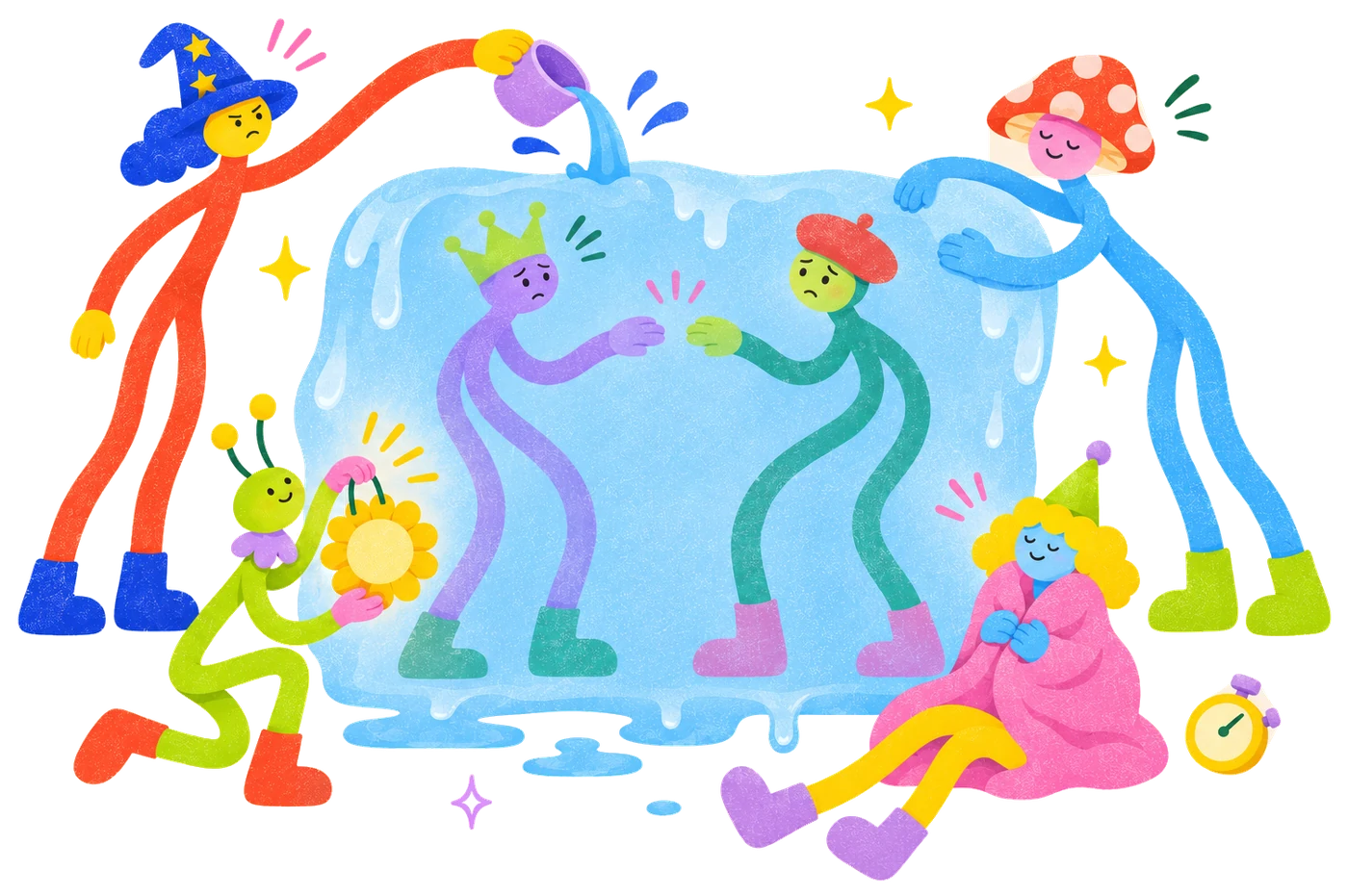
The muscles iced over.
Do that for long enough and something stiffens. Our social muscles atrophied. They iced over. Plenty of us now find it hard to knock on a neighbor's door, sit through an awkward silence, or ask for help without apologizing first.
The reflex is to fix this the way the industrial world fixes everything: make connection faster, more scalable, more measurable. An app for friendship. A dashboard for belonging.
You can't thaw ice with a stopwatch.
What thawing takes.
Trust doesn't speed up. It builds through repeated, unhurried time: the same people, in the same room, more than once, with nobody checking the clock.
Relational work needs rooms that are protected from efficiency metrics long enough for the ice to melt. That protected time is what we mean by slack.