Cultural ROI
The end goal isn't creating more money. It's a culture of connection.
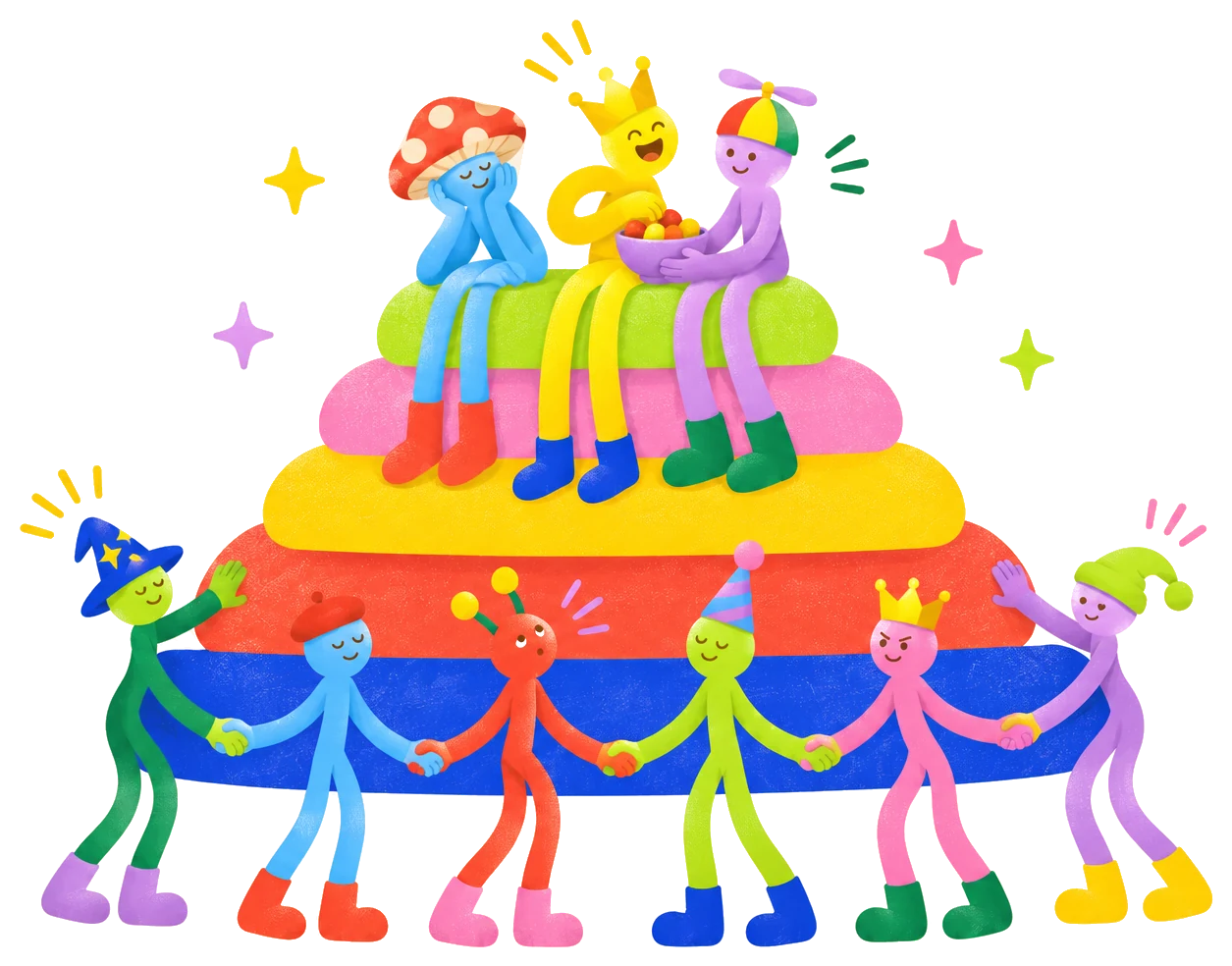
The return is cultural.
Relational projects sometimes make money. But their primary yield is something the market has no column for: Cultural ROI.
Think of it as preventive care for culture. When people are in healthy relationship with themselves, their partners, their neighbors, and their city, they catch each other before they fall. They feel safe enough to take creative risks. They invent things. They actually want to raise kids where they live.
None of that shows up on a quarterly report. All of it decides whether a place is worth living in.
The pyramid sits inside a circle.
Most of us were taught Maslow's hierarchy of needs as a pyramid with one person at the top, self-actualizing alone.
We think community sits at the top of the pyramid, and holds every layer beneath it.
The highest form of human agency isn't a solo summit. It's a group of people who feel safe and connected enough to make something together. It's also why we say genius rises in scenes, not in isolation.
Tending yourself is ecological, not selfish.
We live inside concentric rings of relationship: with ourselves, our partners, our neighbors, our city, and our culture. When one ring falls out of health, the whole ecosystem warps around it.
So your relationship with yourself isn't a retreat from community. It's the innermost ring of it. People who build relational worlds tend to pour into everyone else until their own cup is empty. In our squad, only giving and never receiving is treated as a warning sign, not a virtue.
Why this needs patient backing.
Relationship takes time. The moment a young relational project has to report to short-term quantitative metrics, the founder starts serving the metric instead of the bond, and the magic breaks.
Patronage funds the outer container, so that inside the room, trust and reciprocity can do their work.